
Google Assistant. Siri. Alexa. In-car.
Voice Search Optimisation
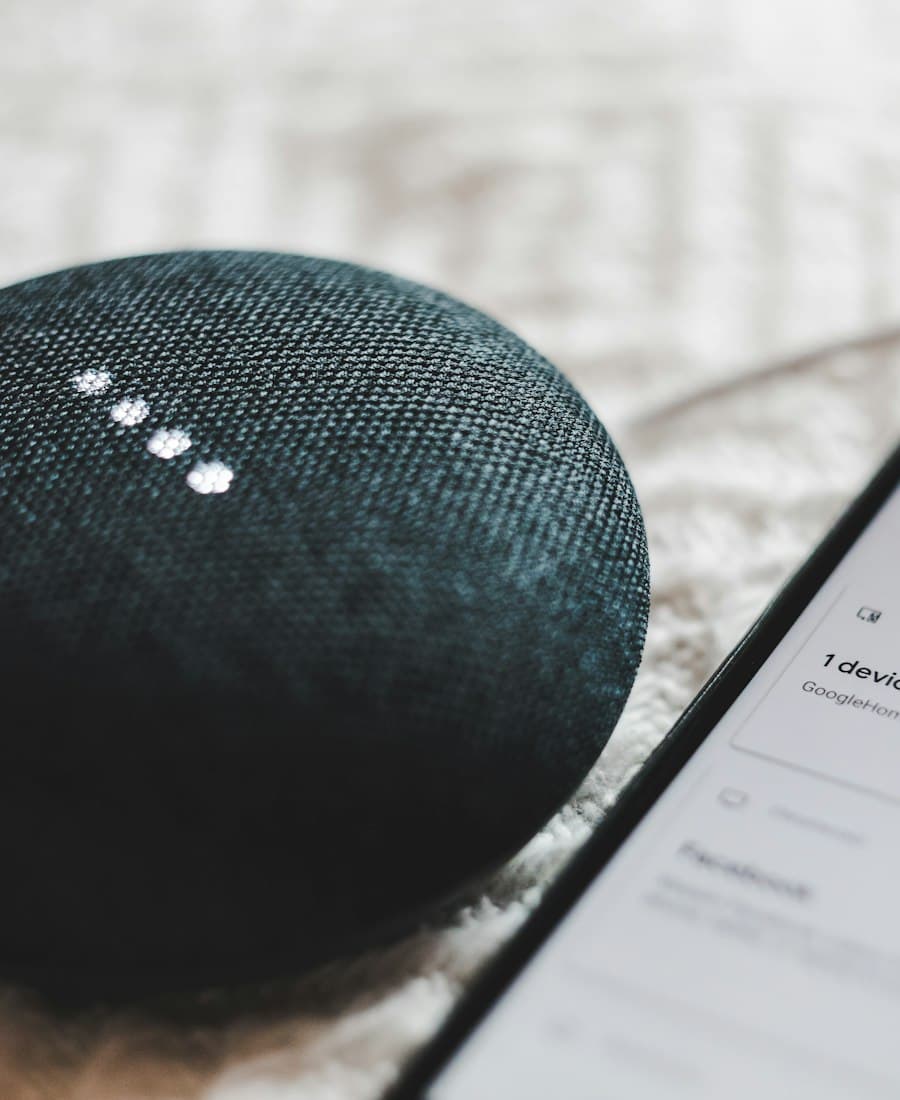
A screen shows ten results and lets the person choose. A speaker reads one. There is no page two in voice search, no scrolling, and no second chance, which makes it the least forgiving surface your business appears on.
Voice search optimisation is the work of being that single result. It overlaps with local SEO and with answer engine work, but the winning condition is narrower than either: your answer has to be short enough to speak aloud and confident enough that the assistant will commit to it.
Why spoken search behaves
Nothing Like Typing
People type like a telegram and speak like a person. Typed: plumber ealing. Spoken: who is the best emergency plumber near me that is open right now. The second is longer, conversational, framed as a question, and far more likely to carry local and immediate intent.
That changes what you optimise for. Keyword phrases matter less, question phrasing matters more, and the answer has to survive being read aloud with no formatting, no bullet points and no link to click.
What voice search optimisation consists of:
- Question-shaped content: pages built around how people actually ask out loud, with the answer given in one or two speakable sentences before any detail.
- Featured snippet targeting: assistants frequently read the snippet. Winning position zero on a query is often the same job as winning the spoken answer.
- Google Business Profile accuracy: most voice queries with local intent are answered straight from your profile. Opening hours that are wrong on a bank holiday cost you the answer entirely.
- Near me and open now readiness: the two most common voice modifiers. Both are resolved by profile data rather than by your website.
- Speakable and FAQ markup: structured data that tells an assistant which passage is safe to read aloud, matched exactly to the visible copy.
- Speed and mobile rendering: voice queries are overwhelmingly mobile and frequently in the car. A slow page is disqualified before it is considered.
Find out what an assistant says today when somebody asks for a business like yours.
Discuss Voice SearchChoosing between providers
Voice Search Agency or Consultant?
Search for a voice search optimisation agency in the UK and you will find two kinds of firm. The first treats voice as a genuine surface and measures it by asking assistants real questions. The second has a service page and a slide about smart speaker adoption.
The test is simple enough to apply on a first call. Ask them to demonstrate a query where a client of theirs is the spoken answer. Anyone doing the work has a recording or a screenshot. Anyone who does not will talk about how voice is growing.
For most local businesses voice is an extension of work you should be doing anyway. If that is your situation I will tell you rather than sell you a second retainer.
Get a Voice AuditThe five stages of a
Voice Search Campaign
The order is deliberate. Writing question content before the profile data is right produces pages that assistants will not read from.
- 1
Question Set & Baseline
I build a set of questions in the phrasing your customers actually use out loud, then ask them of Google Assistant, Siri and Alexa. You get a record of who currently gets read out, and where you appear if you appear at all.
- 2
Profile Data
Hours including bank holidays, categories, services, attributes and location accuracy. Most local voice answers come straight from here, so this is fixed before anything is written.
- 3
Speakable Content
Pages and sections that answer each question directly in the opening sentences, in language that survives being read aloud without formatting to lean on.
- 4
Markup & Snippets
FAQ and speakable structured data matched exactly to the visible copy, plus targeting the featured snippets that assistants most often read from.
- 5
Re-Ask & Track
The same question set, re-asked monthly across each assistant. Where a competitor is still the answer, that becomes the next brief rather than a mystery.
What you actually get
Included
Spoken question set
Thirty to fifty questions in the phrasing your customers genuinely use aloud.
Three-assistant baseline
Google Assistant, Siri and Alexa asked separately, with who gets named.
Profile data audit
Hours, categories, attributes and holiday hours, which answer most local voice queries.
Speakable content build
Answers written short enough to be read out and specific enough to be worth reading.
FAQ and speakable markup
Structured data matched to the visible copy, never contradicting it.
Featured snippet targeting
Because the snippet is frequently what gets spoken.
Mobile speed check
Measured on 4G, since voice queries are overwhelmingly mobile.
Monthly re-asking
The same questions, the same assistants, tracked over time.
Coverage across the UK
Voice Search Across Britain
Voice queries carry heavy local intent, so the profile work behind them is geographic. The content and markup side travels anywhere.
London
- City of London
- Westminster
- Ealing
- Uxbridge
- Camden
- Croydon
South & East
- Reading
- Brighton
- Oxford
- Cambridge
- Southampton
- Norwich
Midlands & North
- Birmingham
- Manchester
- Leeds
- Sheffield
- Liverpool
- Newcastle
Wales & Scotland
- Cardiff
- Swansea
- Edinburgh
- Glasgow
- Aberdeen
- Bristol
Voice is the surface where being open now and two streets away beats being the best-known name in the county.
Straight answers
Questions,
Answered
What is voice search optimisation?
It is the work of becoming the single result a voice assistant reads aloud when somebody asks a question out loud. Because there is no list to choose from, the goal is narrower than ordinary SEO: your answer has to be concise enough to speak and trusted enough for the assistant to commit to it.
Is voice search optimisation different from AEO?
They overlap and they are not the same. AEO is about being cited inside a written answer from ChatGPT, Perplexity, Gemini or AI Overviews. Voice is about being the spoken result from Google Assistant, Siri or Alexa, which leans far more heavily on your Google Business Profile and on featured snippets. Most businesses need both, and the foundations serve each.
Does voice search actually produce enquiries?
For local services, yes, though less than the Map Pack does today. The pattern worth noticing is that voice queries skew towards immediate intent: open now, near me, call. Those convert well when you win them. I would not build a budget around voice alone, and I will say so if that is what you are considering.
Do I need a smart speaker strategy?
Almost certainly not as a separate thing. The overwhelming majority of voice queries happen on phones and in cars, not on kitchen speakers. Anyone proposing a standalone smart speaker strategy for a local service business is selling a slide rather than a plan.
How do you measure voice search results?
By asking. A fixed question set is put to each assistant on a schedule and the answers are recorded, so you can see whether your name appears and how it changes. Analytics will not show you this, because a spoken answer usually produces no visit at all.
Do you offer this outside London?
Yes. I am based at 9 New Change in the City of London and work with businesses across the whole of the UK. The profile work is local by nature, the content and markup side is not.
The rest of what I do
Other Services
Shahed Parvej, Local SEO, AEO & GEO Consultant. 9 New Change, London EC4M 9AG. Serving London and the whole of the UK.
Based in the City of London
Find Me on the Map
I work with businesses across the whole of the UK, but the office is real and it is in EC4, a short walk from St Paul's.
If you would rather talk in person than over a call, say so and we will sort a time.
Are you ready to
Get in Touch?
Tell me what your business does and where it needs to be found. I'll send back a prioritised fix list within 24 hours. It's free, and yours to keep whether we work together or not.
fill this in ↘